
HIV prevention has advanced significantly over the past decade, providing individuals with more options than ever before to protect their health. One of the most effective HIV prevention tools available today is Pre-Exposure Prophylaxis (PrEP). For people who may be at increased risk of HIV exposure, PrEP offers a safe, reliable, and highly effective way to reduce the risk of infection when taken as prescribed.
At Spectrum by Equalis Health, we are committed to making HIV prevention accessible through evidence-based care, personalized treatment plans, and ongoing clinical support. Whether you're considering PrEP for the first time or looking to better understand how it fits into your healthcare routine, our experienced team is here to help you make informed decisions.
Despite its proven effectiveness, many people still have questions about PrEP. What exactly is it? Who should take it? How long does it take to work? Are there side effects? This comprehensive guide answers the most frequently asked questions and explains everything you need to know about PrEP, from eligibility and effectiveness to ongoing care and monitoring.
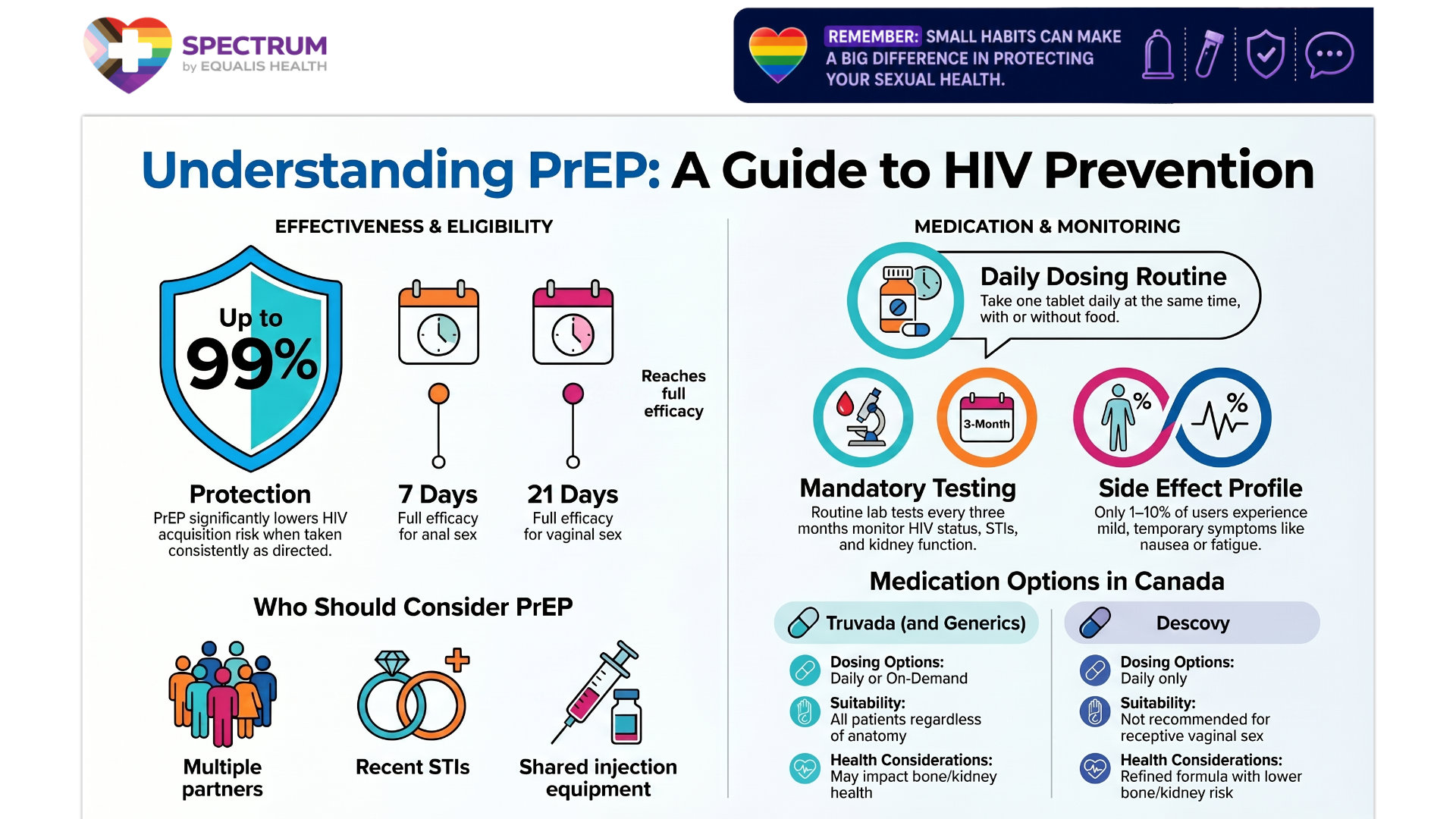
PrEP stands for PrEP clinic Alberta virtual, a preventive medication designed for HIV-negative individuals who may be at risk of HIV exposure. When taken consistently as prescribed, PrEP can reduce the risk of acquiring HIV through sexual activity by up to 99%.
PrEP works by maintaining protective levels of medication in the bloodstream and body tissues. If HIV enters the body, the medication helps prevent the virus from establishing an infection, significantly reducing the likelihood of transmission.
It is important to understand that PrEP is designed to prevent HIV only. It does not protect against other sexually transmitted infections (STIs), nor does it provide contraception.
To understand how PrEP works, it helps to understand how HIV infects the body.
HIV attacks immune system cells and uses them to reproduce. Without treatment, the virus can weaken the immune system over time and eventually lead to AIDS.
PrEP contains antiretroviral medications that create a protective barrier within immune cells. When HIV enters the body, the medication prevents the virus from successfully entering and replicating within those cells. Without the ability to multiply, HIV cannot establish an infection.
This preventive approach has transformed HIV prevention and has become a cornerstone of modern sexual health care.
There are currently two commonly prescribed oral PrEP medications available in Canada:
Truvada has been used extensively worldwide and is approved for HIV prevention in individuals of all genders and anatomies. It may be prescribed as daily PrEP and, in some situations, on-demand dosing under medical supervision.
Descovy offers similar HIV protection with a lower risk of certain kidney- and bone-related side effects. However, it is not currently recommended for individuals who have vaginal tissue and engage in vaginal sex.
A healthcare provider can help determine which option best suits your medical history, lifestyle, and insurance coverage.
PrEP is recommended for HIV-negative individuals who may have an increased risk of HIV exposure.
You may benefit from PrEP if:
PrEP is commonly used by gay, bisexual, and other men who have sex with men, transgender individuals, sex workers, and people who inject drugs. However, eligibility is based on individual risk factors rather than identity alone.
One of the most common questions people ask is how quickly PrEP begins working.
PrEP does not provide immediate protection. The medication needs time to build up in body tissues before reaching protective levels.
PrEP reaches maximum effectiveness after approximately 7 days of daily use.
PrEP reaches full protective levels after approximately 21 days of daily use.
During this initial period, healthcare providers generally recommend using condoms and other preventive measures until PrEP has reached full effectiveness.
Most people tolerate PrEP very well. If side effects occur, they are typically mild and temporary.
Some individuals may experience:
These symptoms often improve within the first few weeks of treatment as the body adjusts to the medication.
Certain PrEP medications may also affect kidney function or bone health in a small number of individuals, which is why routine monitoring is an important part of ongoing care.
PrEP care involves more than simply taking a daily pill.
Before starting treatment, healthcare providers typically perform tests for:
Once on PrEP, follow-up testing is generally required every three months. These regular check-ins help ensure the medication remains safe and effective while monitoring overall sexual health.
There is no fixed timeline for PrEP use.
Some people use PrEP during periods of increased HIV exposure risk, while others continue treatment for many years. The decision depends on your lifestyle, relationships, and personal health goals.
If you are considering stopping PrEP, it is important to discuss this with your healthcare provider to ensure a safe transition and continued protection.
PrEP offers several important benefits:
PrEP has revolutionized HIV prevention and continues to help individuals take control of their sexual health with confidence. Whether you are exploring HIV prevention options for the first time or considering whether online PrEP prescription in Alberta fits your lifestyle, understanding how it works, who can benefit, and what ongoing care involves is essential.
Spectrum by Equalis Health use regular monitoring and guidance from a qualified healthcare provider, PrEP remains one of the most effective tools available for preventing HIV and supporting long-term sexual wellness.


Teagan L, Calgary Downtown Resident

Calgary, AB
© 2026 Spectrum by Equalis Health.
All rights reserved.
Powered By Webflow