Syphilis is a bacterial sexually transmitted infection (STI) that is curable but easy to miss. Alberta has been dealing with a syphilis outbreak for several years, so it is worth knowing the signs and where to get tested in Calgary and across the province.
Alberta declared a syphilis outbreak in 2019. In 2014, only 160 cases were reported in the province. Between 2015 and 2025, nearly 21,000 infectious syphilis cases were reported in adolescents and adults, along with more than 430 cases in babies. Congenital syphilis passes from a pregnant person to the baby and can cause stillbirth or serious lifelong health problems.
How Syphilis Spreads
Syphilis passes through direct contact with a syphilis sore during vaginal, anal, or oral sex. The sores are often painless and hidden inside the mouth, vagina, or rectum, so many people pass it on without knowing. It does not spread through toilet seats, shared dishes, or hugging.
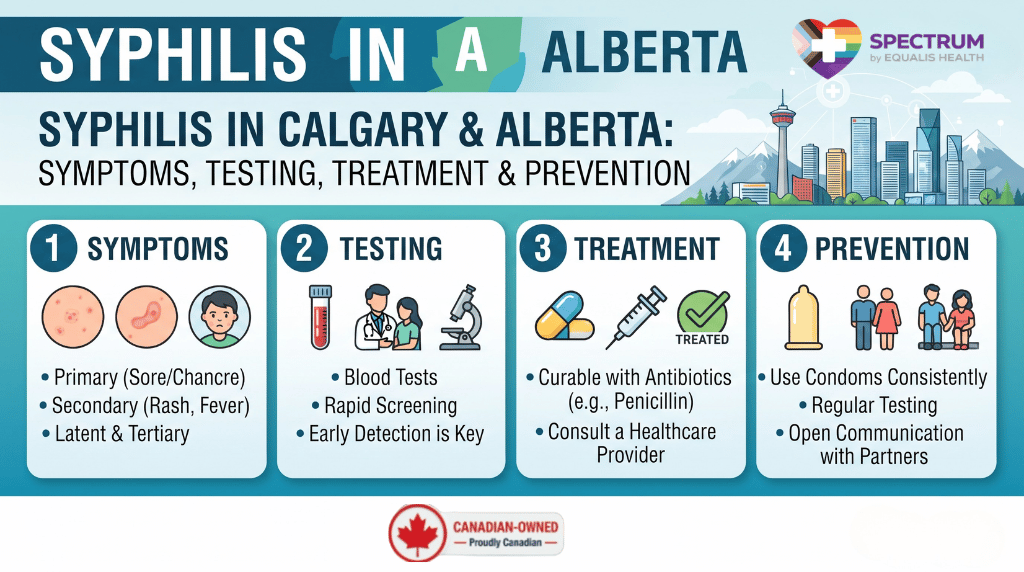
Primary stage: About three weeks after exposure (the range is 10 to 90 days), a single firm, round, painless sore called a chancre appears. It heals on its own, but the infection stays in the body.
Secondary stage: Weeks to months later, a non-itchy rash may appear, often on the palms and soles. Fever, sore throat, swollen glands, fatigue, patchy hair loss, and wart-like patches can also occur. These fade without treatment, which can look like recovery.
Latent stage: There are no symptoms, but the bacteria remain. This can last years.
Tertiary stage: In some untreated cases, syphilis damages the heart, blood vessels, brain, and nerves decades later.
At any stage, the infection can reach the nervous system, eyes, or ears. Severe headaches, vision changes, hearing loss, or confusion need urgent medical care.
Since syphilis can be silent, testing is the only reliable way to know. Diagnosis is mainly by blood test, and a swab may be taken from an open sore.
Free testing in Alberta: STI testing and treatment are available for free throughout Alberta, including at the Alberta Health Services STI clinics in Calgary. Call 811 to be connected to your local STI clinic, or visit ahs.ca/srh to find a clinic near you.
Rapid testing: Alberta has expanded rapid point-of-care testing, which lets someone test and, if positive, get treatment in a single visit. A University of Alberta-led study found that new syphilis cases dropped after rapid testing and same-day treatment were introduced, although rates remain high. Point-of-care testing is now offered in acute care facilities and community settings across the province.
During pregnancy: In Alberta, all pregnant people should be screened for syphilis in the first trimester and again at delivery, with additional testing throughout pregnancy for anyone with ongoing risk.
Consider testing if you:
Very early infection can test negative, so your provider may suggest repeat testing after a recent exposure. Syphilis often occurs with other STIs, so screening for HIV, chlamydia, and gonorrhea at the same visit is sensible.
Penicillin is the standard treatment:
In Alberta, medications used to treat notifiable STIs, including syphilis, are provided free of charge. Alberta's STI program also works to make sure sexual partners of people with syphilis are located, tested, and treated.
After treatment:
Do not self-treat with leftover antibiotics, as this can hide symptoms without curing the infection. Having had syphilis does not make you immune.
There is currently no vaccine for syphilis.
Book a visit if you notice an unexplained sore, rash, or flu-like symptoms after a possible exposure, or if a partner tests positive. Seek urgent care for sudden vision or hearing changes, severe headache, or confusion. Early treatment is simple and effective, and testing is a routine part of staying healthy.
Worried about syphilis or other STIs? Book a confidential consultation with Spectrum by Equalis Health.
This article is for general education and does not replace professional medical advice.


Teagan L, Calgary Downtown Resident

Calgary, AB